
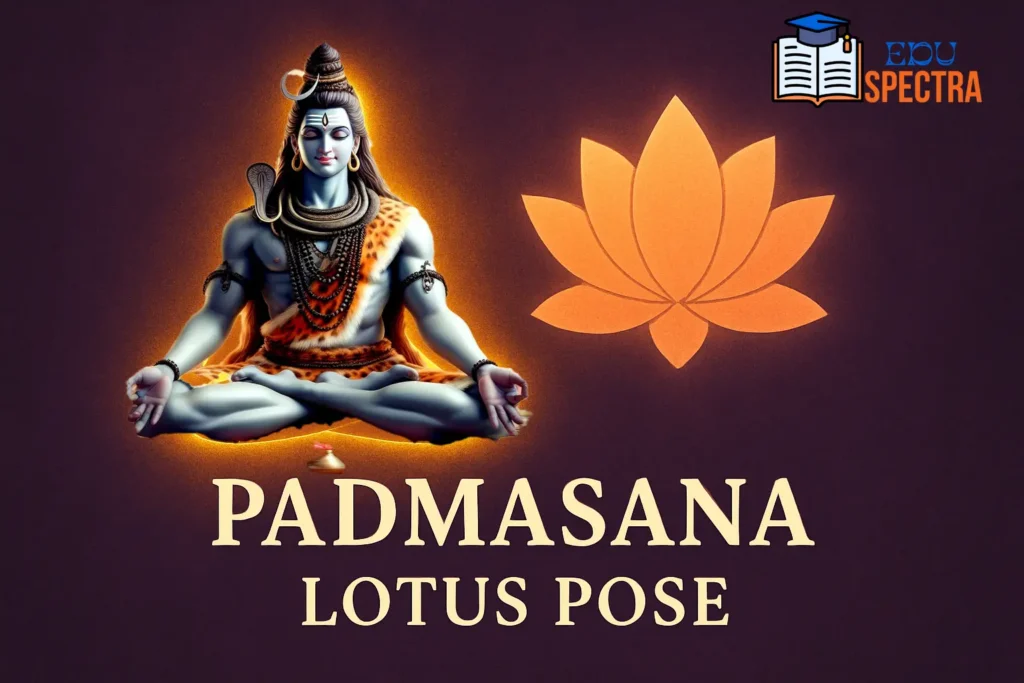
When we think of yoga, one image often comes to mind—someone sitting peacefully in Padmasana, or the Lotus Pose. This posture gets its name because the folded legs resemble the petals of a lotus flower. For centuries, yogis and meditators have considered it the best position for inner stillness.
How to Practice Padmasana
- Start by spreading a yoga mat and sitting upright.
- Slowly fold your right leg and place it over your left thigh.
- Then, fold the left leg and place it over the right thigh.
- If both legs don’t go up at once, don’t force it—begin with one leg and improve gradually. With regular practice, the body adapts, and you’ll sit comfortably in full Padmasana.
- Keep your spine, neck, and head straight.
- Rest your hands on your knees and form Gyan Mudra (joining thumb and index finger). You can also rest your hands in your lap.
- Close your eyes or keep them half-open, whichever feels natural.
- Now focus on your breathing—slow, deep inhalations and exhalations. Try to keep your mind steady, either on your breath, the tip of your nose, or a point in front of you.
Benefits of Padmasana
- Padmasana is not just a sitting posture—it has profound effects on the mind and body:
- Improves blood circulation and balances breathing.
- Calms the mind, reduces stress, anger, and anxiety.
- Boosts focus, concentration, and mental clarity.
- Helps overcome unhealthy habits like smoking, drinking, or other addictions.
- Relieves common issues like insomnia, constipation, gas, asthma, and obesity.
- Enhances digestion, appetite, and energy levels.
Why Yogis Prefer Padmasana
In yogic tradition, Padmasana is described as a miracle posture because it purifies energy channels (nadis) and prepares the body for long hours of meditation. When combined with pranayama (breathing exercises) and a sattvic diet (pure, plant-based food), its impact becomes even stronger—giving not only physical strength but also spiritual power.
Padmasana is more than just a yoga pose—it’s a bridge between body and mind. With consistent practice, it brings peace, confidence, and vitality into everyday life. No wonder it has been the posture of choice for saints, sages, and meditators for thousands of years.